No products in the cart.
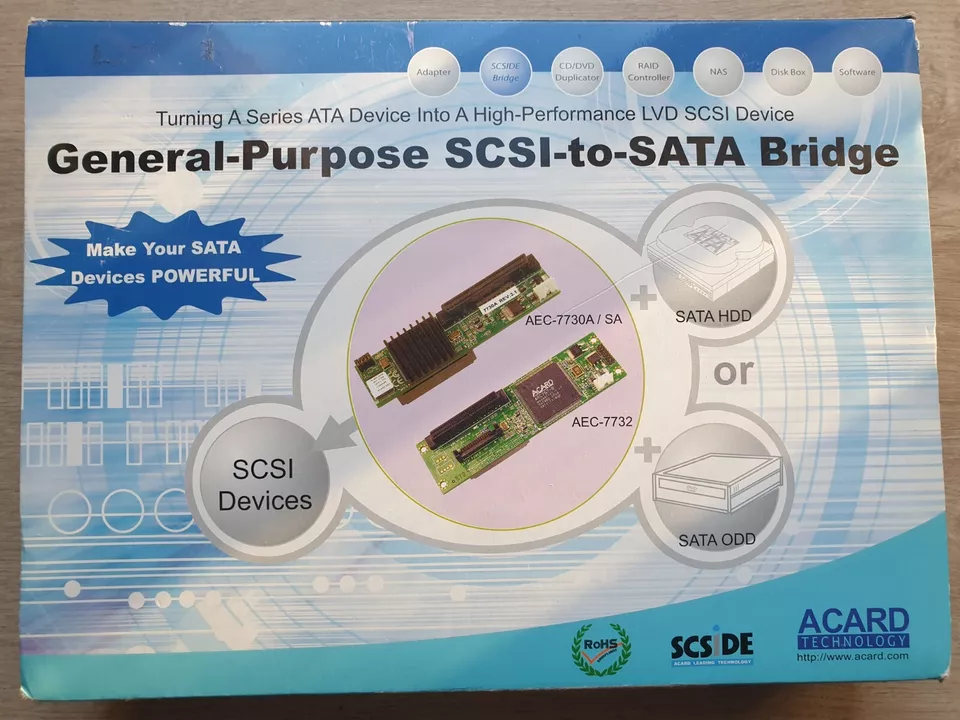
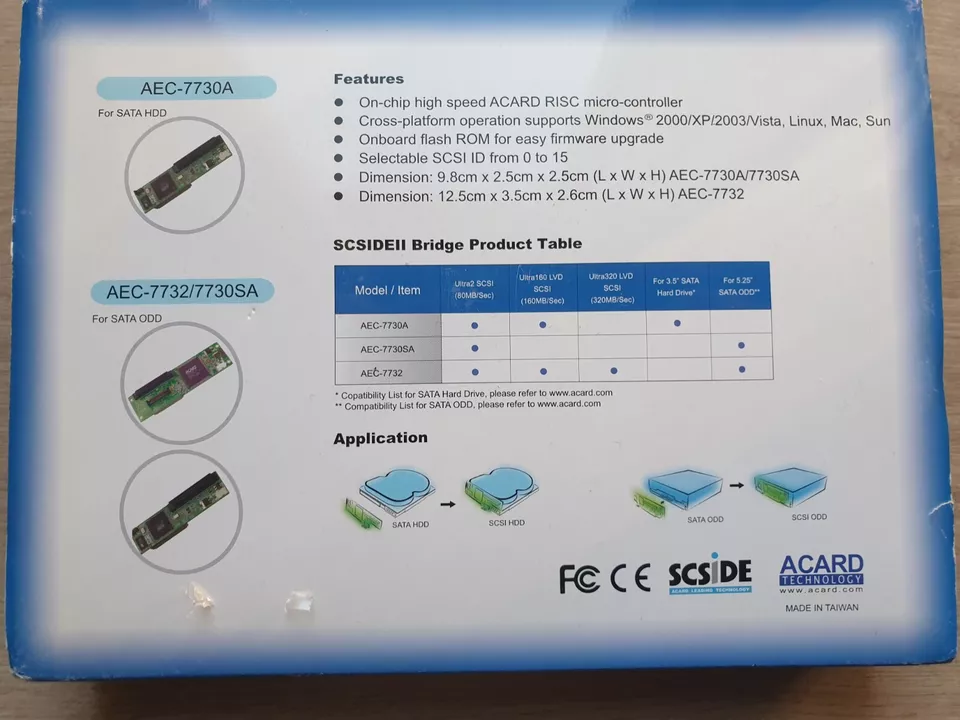
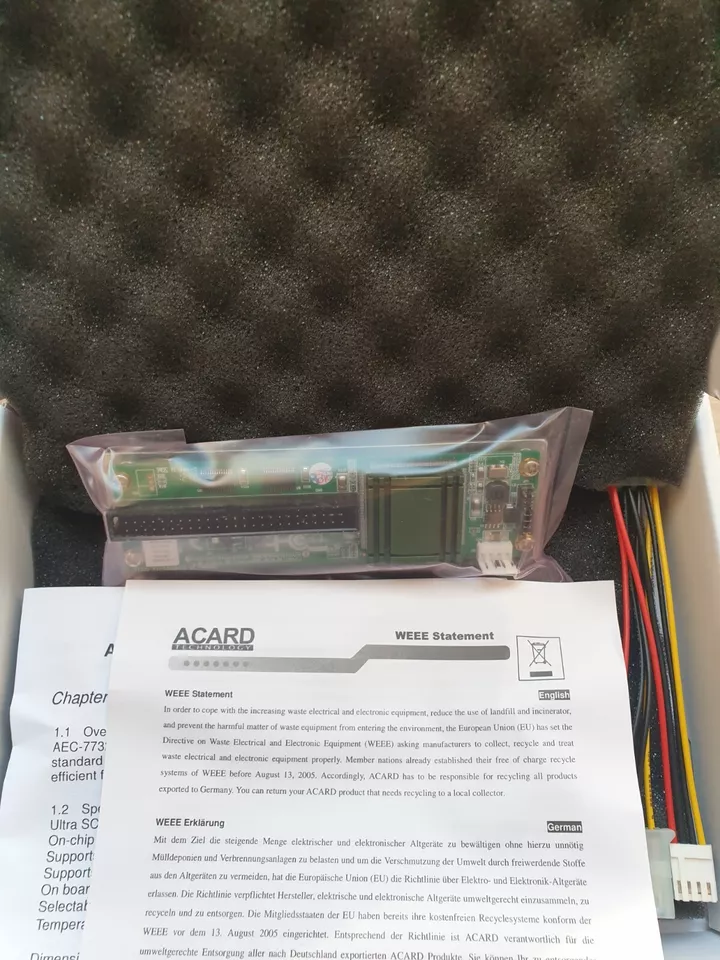
General-Purpose SCSI-to-SATA Bridge


Interface Compatibility:
SCSI: Supports SCSI standards such as SCSI-1, SCSI-2, SCSI-3, or specific SCSI connector types (e.g., DB25, HD50, VHDCI).
SATA: Compatible with SATA standards (e.g., SATA I, SATA II, SATA III) for connectivity to modern SATA hosts.
Bridge Chipset: Utilizes a specialized chipset for protocol conversion and data transfer between SCSI and SATA interfaces.
Connectors:
SCSI Side: Features SCSI connectors compatible with various SCSI device types (e.g., DB25, HD50, VHDCI).
SATA Side: Includes SATA data and power connectors to interface with SATA hosts (e.g., SATA data cable and SATA power connector).
Power Requirements: Typically powered by an external power adapter to supply adequate power for the bridge operation and connected SCSI devices.
Data Transfer Rate: Supports data transfer rates compatible with SCSI and SATA specifications, ensuring efficient data transmission between devices.
LED Indicators: Optional LED indicators for power status, activity, and data transfer monitoring.
Dimensions: Compact and portable design suitable for integration into various computing environments.
Compatibility: Ensures compatibility with a wide range of SCSI devices and SATA hosts, providing flexibility in deployment.
Operating System Support: Compatible with major operating systems (e.g., Windows, macOS, Linux) to facilitate seamless integration and operation.
Applications: Designed for applications such as legacy device integration, data migration, testing, and development involving SCSI and SATA technologies.
Additional Features:
Plug-and-Play: Typically designed for easy installation and configuration, requiring minimal setup to start bridging SCSI and SATA devices.
Compatibility: Verify compatibility with specific SCSI device types (e.g., SCSI hard drives, scanners, tape drives) and SATA host systems to ensure seamless operation.
Durability: Built with durable materials and components to ensure reliability and longevity in diverse operating environments.
A general-purpose SCSI-to-SATA bridge is a device or adapter that facilitates communication between SCSI (Small Computer System Interface) devices and SATA (Serial ATA) devices. Here’s a detailed description of its purpose, functionality, and typical features:
Description:
Purpose: The SCSI-to-SATA bridge serves as an interface converter between older SCSI devices and modern SATA-based systems. It allows SCSI devices, which were prevalent in older computing systems and peripherals, to connect and communicate with newer SATA-enabled computers, servers, or storage systems.
Compatibility: Designed to support various SCSI standards (e.g., SCSI-1, SCSI-2, SCSI-3) and SATA versions (e.g., SATA I, SATA II, SATA III), ensuring broad compatibility across different generations of devices.
Functionality: Acts as a translator or mediator between the SCSI protocol used by the older devices and the SATA protocol used by newer systems. It enables data transfer and command communication between SCSI devices (such as hard drives, scanners, or tape drives) and SATA hosts (such as motherboards or RAID controllers).
Features:
Bridge Chipset: Contains a specialized chipset that handles the conversion of SCSI commands and data to SATA protocols and vice versa.
Connectivity: Typically equipped with SCSI connectors (e.g., DB25, HD50, VHDCI) on one end to connect to SCSI devices and SATA connectors (e.g., SATA data and power) on the other end to connect to SATA hosts.
Power Supply: Often requires external power via a dedicated power adapter to ensure adequate power supply for both the bridge operation and connected SCSI devices.
LED Indicators: Some models include LED indicators to signify power status, activity, and data transfer.
Applications:
Legacy Device Integration: Enables integration of legacy SCSI devices into modern SATA-based systems without the need for complete hardware replacement.
Data Migration and Recovery: Facilitates data migration or recovery tasks involving SCSI devices by connecting them to contemporary SATA-equipped computers or storage solutions.
Testing and Development: Useful in testing, development, or troubleshooting scenarios where interfacing between SCSI and SATA technologies is required.
Advantages:
Cost-effective Solution: Provides a cost-effective alternative to upgrading entire systems or replacing legacy SCSI devices.
Compatibility: Ensures backward compatibility and support for older SCSI devices that may still be functional or critical to operations.
Considerations:
Performance: Bridge performance can vary based on the specific chipset and protocol translation capabilities. It’s essential to choose a bridge that meets the speed requirements of both SCSI and SATA devices.
Compatibility: Verify compatibility with the SCSI devices and SATA hosts involved, including support for SCSI device types (e.g., SCSI hard drives, scanners, tape drives).
Power Requirements: Ensure adequate power supply to support both the bridge and connected SCSI devices, especially for devices requiring higher power consumption.
In summary, a general-purpose SCSI-to-SATA bridge serves as a versatile adapter that enables the integration, connectivity, and interoperability between older SCSI devices and modern SATA-based systems, extending the usability and functionality of legacy hardware in contemporary computing environments.
Related products


Computer Accessories
Fellowes Mouse Mat Wrist Rest Crystal Gel Mouse Wrist Support Black


Computer Accessories
SteelSeries Aerox 5 Wireless Gaming Mouse – Ultra Lightweight 74g – 9 Buttons –

Computer Accessories
MEDIARANGE SIM Port Bag / Memory / USB Keys – 15 Seater – Great

Computer Accessories
V9 Gaming Mouse Wired USB Breathing light Computer Mice RGB Gamer PC 8 Button

Computer Accessories


Computer Accessories
NEW HP ShareBoard Whiteboard Camera Capture Export Stream PDF Web 2TX38AA


Computer Accessories
【25pcs】 ReFind Camera Cover Privacy Blind For Phones, Laptops, Desktop Computer


Computer Accessories
Genuine 400W ADP-400CB B Laptop Charger for Msi Titan 18 HX Power Supply Adapter